Aitomatic CEO Named Chief Architect of Project Tapestry, Global Frontier AI Initiative Alongside Yann LeCun and the AI Alliance

.svg)
.svg)
.svg)
Aitomatic is helping shape a new class of AI infrastructure—one designed not just for scale, but for the realities of industrial and physical systems.
Project Tapestry is not just another AI initiative—it represents a new architecture for how AI is built, shared, and governed globally.
Launched by the AI Alliance, the initiative brings together more than 200 organizations to enable the federated development of frontier AI models, allowing collaboration across institutions without centralizing data, compute, or control.
Dr. Christopher Nguyen, Founder and CEO of Aitomatic, has been named Chief Architect of Project Tapestry, playing a central role in designing how this new class of AI systems will be built across industries and real-world environments, "to build a shared global base openly, then enable each participant to extend it in ways they fully own and control.”
Yann LeCun, who joined the AI Alliance as Chief Science Advisor, is helping define the scientific vision behind Project Tapestry, emphasizing that “as AI is fast becoming part of the common infrastructure, there is a need for foundation models to be open so as to enable sovereignty and cultural diversity.” He adds that “AI should not be controlled by a handful of private entities through proprietary products,” pointing instead to the legacy of open science and open-source systems as the model for scalable progress.
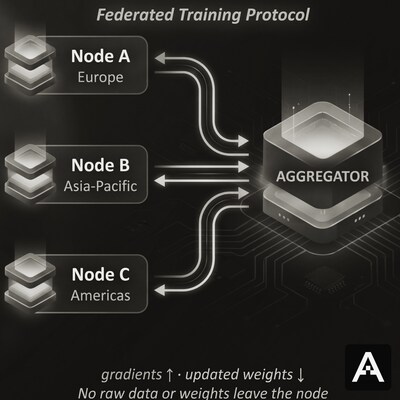
“Project Tapestry is about enabling a new model of AI—one that is open, collaborative, and designed for sovereignty,” said Anthony Annunziata, Director of AI Open Innovation at IBM and Chair of the AI Alliance. That foundation is especially critical for industrial and physical AI.
In manufacturing, energy, and other real-world systems, competitive advantage is not just in data—it is rooted in proprietary knowledge and deeply embedded domain expertise. These systems rely on years of accumulated operational understanding that cannot be centralized or exposed without risk.
Traditional AI architectures often force a tradeoff between collaboration and control. Project Tapestry removes that tradeoff. By enabling a federated architecture, it allows organizations to build on a shared global base while maintaining full ownership of their systems—collaborating on frontier AI models without exposing the knowledge and expertise that define their edge.
This principle—“open at the core, sovereign at the edge”—captures how these systems can scale across industries without compromising ownership, governance, or performance. Together, the AI Alliance and its contributors are establishing a new layer in the global AI stack—one that connects frontier model development with real-world deployment. For Aitomatic, this effort reflects a broader focus on bringing AI into complex, high-stakes environments where systems must operate reliably, adapt continuously, and protect the knowledge that defines them.
This shift—from centralized AI to federated, sovereign systems—requires not just new infrastructure, but new ways of structuring intelligence itself. This perspective informs Aitomatic’s work on cognitive ontology, which structures intelligence in a way that reflects how knowledge is embedded in real-world systems, enabling AI to operate effectively without exposing proprietary expertise. For organizations in industrial and physical AI, Project Tapestry opens the door to a new model of collaboration: contributing to and benefiting from shared advancements, while maintaining control over the processes, knowledge, and expertise that define their competitive advantage.
More broadly, it signals a shift in how AI will be built—toward a network of interoperable, sovereign systems where collaboration accelerates innovation, and ownership preserves value.
This is where the future of industrial AI will be defined—and Aitomatic is helping architect it.